Regina’s fall from the Plastics
Mean GirlsRegina’s fall from the Plastics is the public reversal of the group’s hierarchy: after Cady’s Kalteen-bar deception contributes to Regina’s weight gain, Regina arrives at lunch in sweatpants and is told she can no longer sit with the group. The scene makes the Plastics’ rules more than a tool of Regina’s authority. Once she can no longer embody the appearance those rules protect, Gretchen and Karen enforce them against her, and the cafeteria’s laughter confirms that her social power has collapsed.
The scheme and its consequences
The reversal grows out of the plan to undermine Regina’s control over her appearance. At Cady’s house, Damian finds Kalteen bars in a kitchen cabinet and asks what they are. Cady explains that her mother had used the Swedish nutrition bars to help children in Africa gain weight. Later, Cady offers one to Regina while claiming that her mother uses them to lose weight. Regina accepts the bars, and Cady’s deception turns the food into a means of manipulating the body on which Regina’s status depends.
The plot’s effects become plain when Regina enters the cafeteria in a tracksuit. Her hair is in a sloppy half bun, its roots dark with grease; her skin appears pale and shiny, and the tracksuit pants are stretched tight. Sitting beside Cady at her usual table, she spreads butter on a roll while still following Cady’s false diet advice. Her question about whether butter is a carbohydrate shows how thoroughly she has accepted the advice, even as the visible change in her body contradicts the promise that the bars will help her lose weight.
The clothing crisis had been building before the lunch-table confrontation. Weeks before Spring Fling, Regina took Cady, Gretchen, and Karen to a mall to get their opinions on a pink satin dress she had put on hold. The dress was meant to be tight and sexy, but it no longer fit as intended. Regina insisted it was a size five, the largest size the store carried, and complained that she had been eating only Kalteen bars. She had also been weighing herself weekly, but the scale’s needle had not moved. Cady reassured her that the change was temporary water weight and claimed the label explained the process. The dress makes the scheme’s consequences concrete: Regina cannot dismiss what the bars have done when a garment chosen for her desired image no longer fits.
The lunch-table exclusion
At the table, Gretchen points out that Regina is wearing sweatpants on a Monday. Karen backs her up, saying that this violates the group’s rules and that Regina cannot sit with them. The exchange exposes the selective force of those rules. Regina dismisses them as unreal, but Karen recalls that they were enforced against her when she wore a vest. Regina had defended that earlier exclusion by calling the vest disgusting; now the same kind of judgment is directed at her.
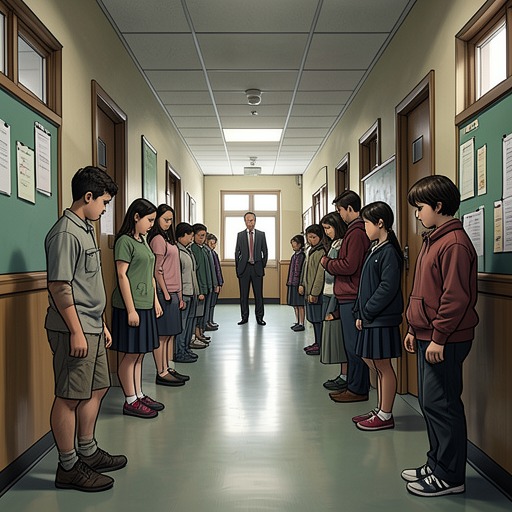
Gretchen shrieks, “You can’t sit with us!” Regina puts down her plastic knife and explains that the sweatpants are all that fit her. She looks from Cady to Gretchen to Karen, but none meets her eyes. The group’s familiar punishment has changed direction: the person who once determined who belonged now stands on the receiving end of the boundary she helped maintain. Regina gets up and tells the others they can walk home, trying to leave with dignity, but the cafeteria offers no quiet exit. She walks into Emma Gerber, who insults her, and the room bursts into laughter at Regina.
From social authority to public ridicule
The cafeteria’s response marks the scale of the reversal. Everyone is laughing at Regina, something Cady says had never happened in the history of North Shore High. Regina shakes her head and retreats from the room as quickly as she can. The scene turns her former advantage into public exposure: her appearance, once part of the authority she exercised over other girls, has become the occasion for a collective rejection.
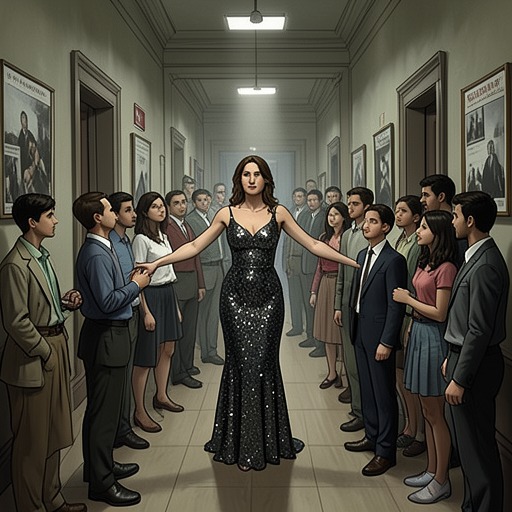
That rejection is not contained to one lunch. The Burn Book later circulates while students are in class, and its revelations set off accusations, tears, and shifting loyalties before the conflict becomes violent between periods. Regina’s exclusion from the table belongs to the same larger unmaking of the social order: the rules that had organized belonging cannot prevent the group from turning on its former leader. The novel’s later Spring Fling ceremony gives that reversal a contrasting image. Cady, crowned amid mixed feelings about the hurt caused by the Burn Book, breaks the plastic crown and shares its pieces with Gretchen and Janis. Where Regina’s fall is enacted through a table that refuses her a seat, the shared crown rejects the idea that status must belong to one person alone.
What the reversal reveals
The scene does not simply show Regina losing influence; it shows how precarious that influence was. Her group’s rules are presented as binding when they can be used to judge another girl, yet Regina calls them unreal when they turn against her. Karen’s reply connects the present exclusion to a prior one, while Regina’s inability to find a fitting outfit makes the group’s appearance-based standard newly consequential for its former enforcer.
The episode also binds social rank to collective performance. The lunch table is a visible stage of membership, and the command that Regina cannot sit there makes the change in her standing legible to the entire cafeteria. The laughter completes the reversal in public: the group’s judgment is no longer organized around Regina’s approval, and the audience that once witnessed her authority becomes an audience to her humiliation. That status will not be restored by a change of clothes; the scene belongs to the wider collapse of the hierarchy Regina had ruled.